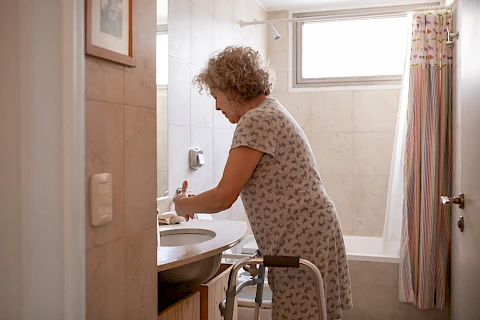
Bathrooms can be one of the trickier areas of the home for older adults to navigate. Water, smooth surfaces, tight spaces, and changes in balance can increase fall risk, but a few practical adjustments can make everyday routines feel safer and more comfortable.
Start With Slips and Trips
Bathrooms can get slippery fast. Water lands on smooth tile, and late-night trips happen before a person is fully awake. Look first at the floor and the route into the room.
Use non-slip mats that stay flat inside and outside the tub or shower. Replace one that curls at the edge, and keep towels, soap, and a robe within reach. The National Institute on Agingrecommends nonslip surfaces in wet areas, grab bars in the bathroom, and night lights to help reduce fall hazards at home.
Keep the path from the bedroom clear as well. Loose runners, electrical cords, shoes, or a low stool can create problems before someone even reaches the bathroom.
Choose Supports That Fit the Space
A towel bar will not do. Grab bars need secure installation where the person actually needs support, such as near the toilet or tub and shower entry. Ask a qualified installer if you are unsure.
A shower chair gives someone a place to sit while washing, and a handheld showerhead can reduce reaching and twisting. Measure the room first. A bench that blocks the doorway or a storage rack that crowds the transfer area can create a new problem.
Watch how the person normally moves through the bathroom. Where do they turn, reach, or look for support? Those everyday movements can help determine where equipment and supplies should go.
Light the Route to the Bathroom
Bright light helps people spot water and obstacles. Add a good fixture near the mirror and a night-light along the route for overnight trips. In Jackson, Pearl, and Flowood, storm clouds can darken an afternoon quickly, making good indoor lighting useful during the day too.
Keep switches easy to reach. Move bottles off the floor and put daily items somewhere they can be reached without stretching or bending unnecessarily.
Slow Down During the Routine
Give bathing and dressing enough time so the person does not feel rushed. Set out towels, clothing, and toiletries beforehand, and encourage sitting while drying or dressing if standing feels unsteady,
Check that faucets and shower controls can be reached comfortably without leaning across a wet surface. If the person uses a walker, make sure there is enough room to turn and position it safely.
A new balance problem, repeated slip, dizziness, or fear of bathing deserves a conversation with a healthcare professional. An occupational therapist may also be able to suggest changes based on how the person actually uses the room.
Keep the Setup Working
Bathroom safety needs can change. Check grab bars, shower-chair feet, mats, lighting, and frequently used equipment periodically to make sure everything remains secure and easy to use.
Falls can have causes beyond the room itself, including vision changes, medication effects, or balance concerns. Tell a healthcare professional about falls or recurring dizziness so those factors can also be reviewed.
Safer Bathroom Routines at Home
A safer bathroom combines the right setup with routines that match the person's mobility and comfort. Small adjustments can help older adults continue personal care with greater confidence.
Senior Helpers Central Mississippi supports families throughout Brandon, Clinton, Flowood, Jackson, Pearl, Richland, and Ridgeland. Contact us to learn how personalized in-home support can make everyday personal care easier and safer.