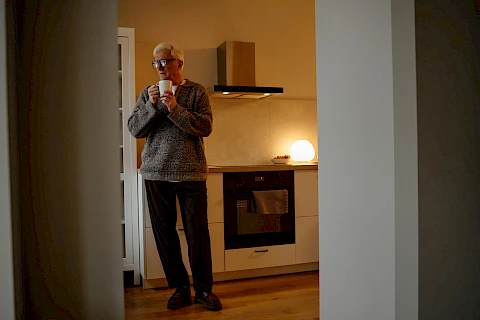
June is Safety Month, and senior home safety is always a priority, including during the hours when most people are asleep. If you're someone who comes alive in the evening, stays up late watching TV, or takes a late-night walk to the kitchen for a snack, you already know that a home that feels perfectly manageable by day can feel different at 2 a.m. A few simple adjustments can make those nighttime hours genuinely comfortable rather than something to navigate carefully.
The Trip Hazards You Stop Noticing During the Day
When you live in a home long enough, you learn to step around things instinctively: the slight rise in the hallway threshold, the corner of the coffee table that juts out, the narrow path between the recliner and the bookshelf. In daylight, your eyes help you manage these automatically. At night, with minimal light and sometimes a bit of grogginess, those same features become real risks.
Do a slow nighttime walkthrough of your home on a day when you're fresh and alert. What's in the path between your bedroom and the bathroom? What would you step on if you got up quickly? What would you grab for balance that might not hold you?
Adding Motion-Activated Night Lights
Motion-activated night lights are one of the best low-cost safety investments for seniors who are active at night. They turn on automatically when you move through a room and turn off after a few minutes, so you don't have to fumble for a switch. You can position them in the following places:
- The hallway between your bedroom and the bathroom
- The top and bottom of the stairs
- Under the kitchen cabinets to illuminate the floor
- In the bathroom near the toilet
You can find plug-in motion-activated lights at hardware stores for a few dollars each. They require no installation, just a standard outlet.
Opting for Adjustable Lighting
If you prefer not to have full brightness in the middle of the night, dimmer switches on bedroom and hallway lights give you control. A low-level glow is often enough to see clearly without disrupting your sleep hormones or waking a partner. Warm-toned bulbs (labeled 2700K or lower) are gentler on your eyes at night than cool-white LED bulbs.
A bedside lamp you can reach from a lying position is also worth considering. Being able to turn on a light without getting up first adds a meaningful safety buffer.
Securing Floors and Pathways
Loose area rugs are a common culprit, not just in nighttime falls. If you have rugs in your bedroom, bathroom, or hallway, they're worth removing. Clear pathways in rooms you use at night, and if your route from bedroom to bathroom passes through a narrow gap, see whether furniture can be rearranged to widen it.
These safety hazards can cause falls, and many happen during nighttime hours when visibility is reduced.
Safety Concerns at Night?
Feeling secure in your own home at night is something you deserve. Families often find that overnight care or an evening check-in from a caregiver removes the worry from late-night hours. Senior Helpers Central Mississippi provides in-home care for older adults across Brandon, Clinton, Jackson, Pearl, and Ridgeland, including overnight and evening support. Contact us to discuss options that fit your schedule and your home.