Parkinson's disease is a progressive neurological disorder that affects movement and can significantly impact daily life. Simple tasks, including mobility, eating, dressing, and more, can become challenging as the disease advances. Assistive devices can enhance the quality of life for individuals with Parkinson's. These tools aid with everyday activities and provide independence and dignity. Senior Helpers explores personalized care solutions that make life easier for seniors with Parkinson's.
Assess and Identify Needs
Identifying the senior's needs is essential in selecting the right assistive devices. A thorough assessment will help caregivers understand the day-to-day difficulties faced by their loved ones. Recognizing these symptoms is the first step toward adequate support, whether it is balance issues, tremors, or difficulty with fine motor skills.
Mobility Aids
Mobility is often a significant concern for people with Parkinson's. Individuals may experience problems with balance and movement as the disease progresses. Mobility aids can help. Here are some common options:
- Canes — Canes are simple yet effective in providing extra balance and support. Straight canes with rubber tips often work best for those with Parkinson's.
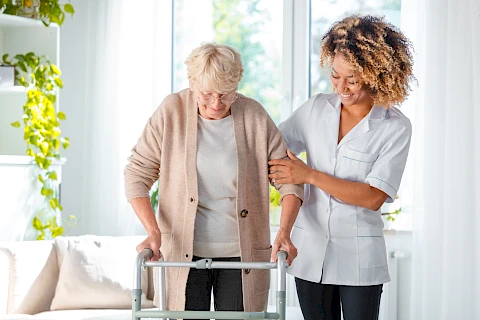
- Walkers — Walkers offer more stability than canes. Rollator walkers can be particularly helpful for those who need additional assistance as they reduce strain on joints and muscles.
- Wheelchairs—Wheelchairs are for individuals who are no longer able to stand or walk safely. Depending on the senior's specific needs and comfort, both manual and power wheelchairs are available.
Eating Utensils
Dining can be difficult for seniors with Parkinson's due to tremors and limited hand coordination. Adaptive eating utensils and tools help promote independence during meals. Weighted utensils can help stabilize the hand and make it easier to eat without spilling. Non-slip mats keep dishes in place to prevent slipping and ensure safer eating. Spill-proof cups reduce spills and make drinking easier. By using these tools, seniors with Parkinson's can maintain their dignity and enjoy their meals with less frustration.
Dressing Aids
Dressing is another area where many with Parkinson's face difficulties. The process can be time-consuming and exasperating due to problems with buttons, zippers, and other fasteners. Button hooks help fasten buttons with minimal effort, while zipper pulls make zipping up clothing easier for those with limited dexterity. Adaptive clothing designed with Velcro or magnet closures can also be beneficial. Using these aids encourages self-sufficiency and reduces frustration during the daily routine of dressing.
Other Helpful Tools
Various other devices can assist with Parkinson's care. Medication management tools, like organizers and reminders, ensure medication is on schedule. Voice amplifiers are helpful for those whose speech may have been affected by the disease. Bed rails provide support and prevent falls at night. These tools can simplify daily life and make it safer and more manageable. Caregivers should encourage seniors with Parkinson's to be involved in the selection process to ensure they are comfortable and willing to use the devices. Regular reassessment and adapting the tools and strategies ensure continued effectiveness.
Senior Helpers Offers Specialized Parkinson's Care
Senior Helpers provides top-of-the-line, in-home senior care services, including our comprehensive Parkinson's Care Program. If you live in the Andover, Anoka, Circle Pines, or Minneapolis areas, don't hesitate to contact us anytime at Senior Helpers North Metro. We are here to provide expert Parkinson's care and guidance on choosing the best assistive devices for your loved one.