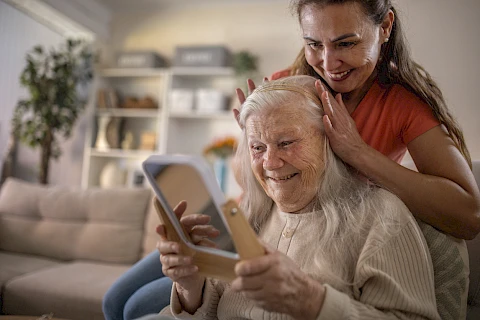
Helping a parent bathe, dress, use the bathroom, or groom can feel different from other caregiving tasks because of the privacy and physical contact involved. An injury, illness, reduced mobility, or changing condition may make these tasks harder. Families may choose to provide personal care themselves, hire a professional caregiver, or combine both approaches based on their loved one's needs and preferences. Each option affects the senior, the caregiver, and the rest of the household differently.
What Personal Care May Involve
Personal care may include bathing, dressing, using the bathroom, grooming, oral hygiene, and moving safely around the home. The amount of help needed varies based on a senior's mobility, health, and ability to complete familiar tasks independently. Understanding these needs can help families decide what type of care may work best.
Helping a Parent With Personal Care Yourself
Family caregivers often start with small tasks, such as helping a parent get into the shower, lay out clothing, or fasten buttons. Providing care may feel natural when you know your parent's routines and preferences. As needs become more hands-on, however, personal care may affect the parent-child relationship. A parent may feel embarrassed, while you may feel uncomfortable providing intimate care. Physical demands, work schedules, transportation, and other responsibilities may also make family caregiving harder to manage safely and consistently.
What a Professional Personal Caregiver May Provide
A professional caregiver can provide hands-on assistance a family member may not feel comfortable or equipped to handle. Some seniors may also find it easier to discuss privacy and personal routines with someone outside the family. Professional caregivers bring training and experience, while scheduled visits can provide consistency when relatives have work or other responsibilities. Before hiring a provider, ask about:
- Rates
- Scheduling
- Caregiver training
- Backup coverage
- Supervision
- Which personal care services are included
A Combination of Family and Professional Care May Work
Care does not have to be all or nothing. Family members may handle meals, errands, or companionship while a professional caregiver assists with personal care. After an injury or hospitalization, transitional care services may provide a smoother home transition as needs change.
Talk With Your Parent Before Changing the Routine
Whenever possible, involve your parent before changing their routine. Ask which tasks have become difficult, what help they prefer, and which activities they want to continue handling independently. Respect their privacy and choices throughout the process. If possible, try the arrangement for a limited time, then discuss what feels comfortable and whether the type or amount of assistance needs to change.
Knowing When Family Care May No Longer Be Enough
A change in personal care needs does not mean a family caregiver has failed. Consider professional help when tasks become physically difficult, uncomfortable, or hard to fit into your schedule, or when your parent needs more assistance than you can safely provide.
Personal Care for Seniors in Greater Grand Rapids
When personal care needs change, families may need to reconsider how they divide caregiving responsibilities. For some families, that means continuing to provide hands-on assistance. For others, bringing a professional caregiver into the home may make daily routines more manageable. A combination of family involvement and professional personal care may also be a good fit.
Senior Helpers Greater Grand Rapids provides personal care services for seniors who need help with bathing, dressing, grooming, or using the bathroom. Families in Belding, Belmont, Byron Center, Cedar Springs, and Comstock Park can contact us to discuss available services and determine whether professional personal care fits their loved one's needs.