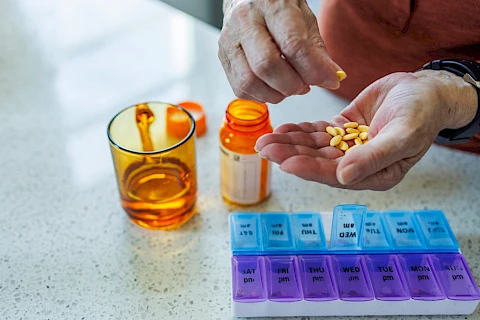
Summer changes the equation for medication management for seniors in ways that don't always get enough attention. In the greater Grand Rapids area, temperatures climb into the 80s and above from June onward, and that heat affects more than comfort. It can affect whether your loved one's medications are working as intended, and whether they're safe to take at all without some adjustments to storage and routine.
Heat and Medication: What Actually Changes
Many medications are more sensitive to temperature than most people realize. Insulin, certain liquid antibiotics, some eye drops, and a range of other drugs can degrade when stored in warm conditions. They can lose potency or, in some cases, become harmful. Most medications carry a label that says "store at room temperature" or "keep below 77°F". These directions are easy to follow but are also surprisingly easy to overlook.
Heat, humidity, and light can all affect drug stability. Pill organizers sitting on a windowsill or medication bags left in a car can be enough to cause a problem. Moving medications to a consistent, cool, dry location inside the home is a simple step with real consequences for how well those medications perform.
In most parts of Michigan, summer humidity adds another variable. Bathrooms and kitchens are typically poor storage choices year-round because of moisture; a bedroom drawer or hallway cabinet usually works better.
Travel and Summer Outings
Summer often means more outings: day trips, family gatherings, and outdoor events. This is where the importance of proper medication management for seniors comes in. Pack medications in insulated bags when traveling in a car, and never leave them in a glove compartment or trunk. If the outing involves a long day away, include doses for the afternoon and evening, with one extra in case plans change. A written medication list is especially useful when your loved one is away from their usual pharmacy.
When Heat Affects How Medications Feel
Some medications increase sensitivity to heat and sun. Diuretics can contribute to dehydration more rapidly when temperatures rise. Certain blood pressure medications, antidepressants, and anticholinergic drugs can impair the body's sweating response, making it harder to cool down naturally. These interactions aren't always listed prominently, but your pharmacist can identify which of your loved one's prescriptions to watch for.
If seniors seem more dizzy or fatigued than usual on hot days, medication interactions are worth raising with their doctor. Seniors who are managing multiple prescriptions may be experiencing a compounded effect.
Organizing for Summer Without Letting Things Slip
Warmer weather tends to bring busier schedules for families, which can make medication management for seniors more challenging. Medication routines can slip just when consistency matters most. An automatic refill program, a weekly organizer checked at the same time, and a brief conversation with a pharmacist heading into summer can prevent most problems before they start.
Senior Helpers Can Assist Your Loved Ones in Managing Medications
Senior Helpers Greater Grand Rapids supports families across Belmont, Byron Center, Cedar Springs, Rockford, and Sand Lake with consistent, attentive in-home care. Contact us to learn how our caregivers can support seniors with medication management and keep them safe through every season.