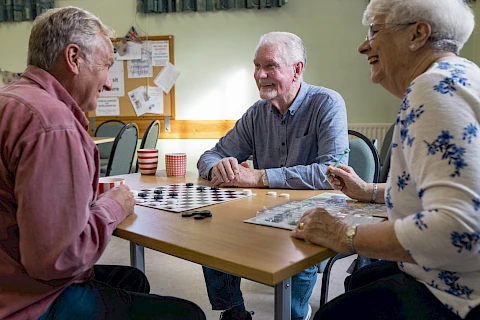
June is Alzheimer's and Brain Awareness Month, and there's a lot of good news embedded in current research about what keeps the brain healthy as we age. The activities that support cognitive health are often the same ones that make life more enjoyable, including brain health activities for seniors.
They include interacting with others, learning something new, moving your body, and devoting time to doing things that you truly enjoy. You don't have to be worried about your memory to benefit from any of this.
Puzzles, Games, and Mental Challenges
The brain responds well to problems that require real engagement. Crossword puzzles, sudoku, jigsaw puzzles, and word games all ask the brain to hold information, spot patterns, and make connections.
These tasks work best when they're challenging enough to require actual concentration. Overly simple puzzles don't provide much more stimulation than passively watching TV.
Card games like bridge, cribbage, and canasta have the added advantage of combining mental challenge with social interaction, which multiplies the benefit.
Chess, checkers, and Scrabble work similarly. If you've always wanted to learn a new card game, summer is a fine time to find a group in Annapolis or Arnold who plays regularly.
Learning Something You've Never Tried Before
The Alzheimer's Association notes that lifelong learning and staying mentally active are associated with better brain health outcomes as we age. The specific subject matters less than the genuine engagement with something new and other brain health activities for seniors.
Learning a language, even casually, challenges the brain in ways that familiar activities do not. Taking up watercolor painting or learning to play an instrument can help keep your mind active. Exploring an area of history you've always been curious about or trying a new cooking technique from a different cuisine also counts.
Libraries and community centers in Annapolis and Crownsville often offer classes and programs for older adults. These can make it easier to try a new activity or learn a new skill.
Physical Exercise and The Brain Connection
Physical activity is one of the most reliably brain-supportive things you can do, and the connection between exercise and cognitive health is well-established. Aerobic exercise increases blood flow to the brain.
Regular physical activity is also associated with a larger hippocampus, the part of the brain that plays a central role in memory. A brisk walk along the waterfront in Annapolis, a gentle swim, a yoga class in Severna Park, or even a regular gardening routine all count.
Before starting a new exercise routine, talk to your doctor to make sure it is appropriate for your needs and health status.
Aim for 30 minutes of moderate movement most days of the week. If that sounds like a lot to start, 10-minute blocks throughout the day add up to the same benefit. The goal is consistency over intensity.
Social Engagement as a Form of Brain Care
Conversation requires the brain to track multiple threads at once: what was just said, what you want to say, what the other person might mean, and what comes next.
Regular social interaction challenges the brain in healthy and meaningful ways. Research consistently links social engagement to better brain health outcomes in older adults.
If your social calendar has thinned out, summer is a good time to re-engage. A weekly coffee with a friend in Pasadena, a book club, a volunteer role at a local organization in Gibson Island, or a community event at a senior center all count.
The relationship between socialization and brain health isn't complicated: staying connected keeps more of the brain in regular use.
Staying Sharp Is a Lifelong Pursuit
The brain you have at 75 or 85 is shaped, in part, by how you've used it and the brain health activities for seniors you continue to practice throughout life.
Senior Helpers Annapolis supports older adults across Annapolis, Arnold, Crownsville, Gibson Island, Pasadena, and Severna Park with in-home care. It encourages activity, social connection, and the routines that keep life full.
Contact us to learn how we can help you stay engaged and well at home.