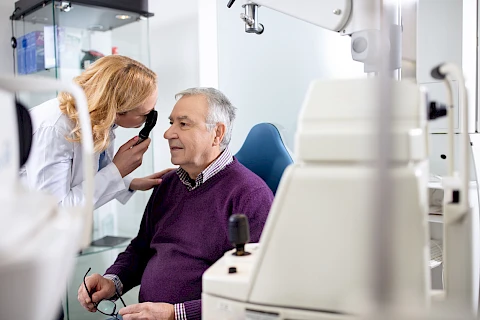
Vision changes quietly. Many seniors don't realize how much their eyesight has shifted until they struggle to read the thermostat, misjudge a step, or can no longer make out faces clearly across a room. As a caregiver, you're often in the best position to notice senior vision changes and help your loved one get ahead of them before they affect safety or independence.
What Normal Aging Does to Seniors’ Eyesight
After age 60, several changes become common. The lens of the eye stiffens, making it harder to focus on close objects. Pupils can shrink slightly and respond more slowly to changes in light. This can make moving between a bright room and a dim hallway genuinely disorienting. Color contrast diminishes, and glare from headlights or direct sunlight becomes more uncomfortable.
Senior vision changes don't mean significant vision loss is inevitable, but they do mean regular monitoring matters. It is recommended that adults over 65 have a comprehensive eye exam at least every one to two years, even without noticeable symptoms. Conditions like glaucoma, macular degeneration, and diabetic retinopathy often progress without pain or obvious warning signs.
Recognizing Signs of Senior Vision Changes
Watch for your loved one holding reading material closer or farther away, squinting frequently, or mentioning that lights seem dimmer than they used to. Complaints about headaches after reading, difficulty driving at night, or frequently bumping into furniture are all worth taking seriously. Falls are another red flag. Impaired vision is a significant contributing factor to falls among older adults. Families dealing with a senior's unexplained stumble should add an eye exam to the follow-up checklist.
Changes in behavior can be subtle. Seniors loved reading the newspaper but have stopped picking it up, or those who avoid going out in the evening because of headlight glare, may not connect those shifts to their eyes without your help.
Adapting Homes for Seniors’ Changing Vision
Good lighting is the most impactful adjustment. Replace dim bulbs with brighter, cooler-toned LED bulbs, especially in hallways, bathrooms, and staircases. Add night lights for pathways used after dark. High-contrast tape on stair edges helps, and decluttering reduces the chance that a visual misread turns into a trip.
Large-print books, phones with bigger display text, and magnifying glasses are small investments that preserve independence. Organizing medications with tactile cues, such as rubber bands around morning bottles, adds an extra level of safety for seniors whose vision makes it difficult to read labels accurately.
Conditions That Require Attention
Some symptoms of senior vision changes call for same-day medical attention. This may include sudden vision loss in one or both eyes, a sudden increase in floaters or flashes of light, or a shadow or curtain effect moving across the visual field. These can signal retinal detachment or another acute condition. Families should know the nearest emergency eye care options in advance, so there's no delay if something urgent arises.
Supporting Eye Health as Part of Daily Care
Scheduling exams, noting changes, and adapting the environment are essential contributions. Senior Helpers Fitchburg works with families across Athol, Orange, Royalston, Warwick, Fitchburg, and Ashburnham to keep seniors safe and well at home. Contact us to find out how our caregivers can support your loved ones.