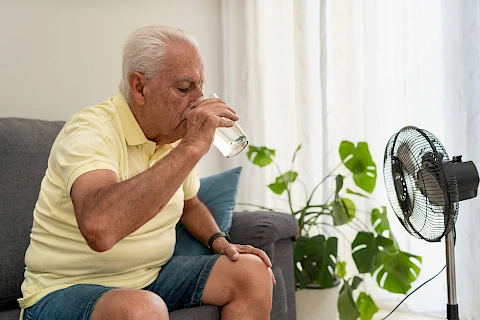
Illinois summers arrive fast. One week, the Fox River is still chilly, and the next, Geneva and Oswego are baking in afternoon heat that feels nothing like spring. For seniors, that shift can be genuinely dangerous. Dehydration is often the cause of symptoms that look like something else entirely.
Why Seniors Are More Vulnerable to Dehydration
The body's ability to sense thirst diminishes with age. This means your parent or senior loved one may not feel particularly thirsty even when they're already behind on fluids. Several common medications, including diuretics and blood pressure drugs, also increase fluid loss. The result: older adults can become dehydrated more quickly and more severely than younger people in the same conditions. A warm June afternoon in Aurora or Plainfield may feel perfectly manageable to your loved one right up to the point where it isn't.
Recognizing Dehydration Before It Becomes Serious
The early symptoms of dehydration can be subtle and easy to attribute to other things. Fatigue, mild confusion, a headache, or darker-than-usual urine are all signals worth taking seriously. Dry mouth, sunken eyes, and decreased urination are more advanced signs.
If your loved one seems more confused or disoriented than usual during hot weather, consider dehydration. The National Institute on Aging notes that dehydration in older adults can contribute to urinary tract infections, kidney problems, and falls. When your loved one shows significant confusion, dizziness when standing, rapid heartbeat, or an inability to urinate, those are signals to seek medical attention promptly.
Strategies for Encouraging Fluid Intake
Getting a senior to drink more water when they don't feel thirsty takes creativity and consistency. A few approaches that tend to work well:
- Offer fluids with every meal and snack, rather than waiting for them to ask.
- Keep a glass of water visible and within reach throughout the day, not tucked away in a cabinet.
- Offer variety: herbal teas, diluted juices, broths, and water-rich foods like cucumber, melon, and grapes all count.
- Set a gentle reminder on their phone or yours, something simple like a midmorning and midafternoon check-in.
- If plain water feels unappealing, try adding a slice of lemon or a few mint leaves.
For seniors in Geneva and the surrounding Oswego and Plainfield communities, the afternoon hours between noon and four o'clock are typically the hottest. Those are the hours to be most attentive to fluid intake, especially if your loved one spends any time near a window or outdoors.
Remote Monitoring When You Can't Be There
If you live apart from your senior loved one, building a hydration check into your daily calls is one of the simplest and most effective things you can do. Ask specifically: "Have you had anything to drink this afternoon?" rather than the broader "Are you doing okay?" A caregiver visiting regularly can also track intake patterns and flag anything concerning.
Smart water bottles that track intake and report to an app on a family member's phone are available at most pharmacies. They are worth considering for a loved one in Aurora or Plainfield who lives independently.
Care That Adapts to the Season
Summer heat requires an active response. Families in Geneva, Aurora, Plainfield, and Oswego, IL, don't have to manage it alone. Senior Helpers of Geneva-Aurora can provide in-home care through the hottest months of the year. This includes attentive monitoring of hydration, nutrition, and overall wellness. Contact us to talk about a care plan that keeps your loved one safe and comfortable all summer long.