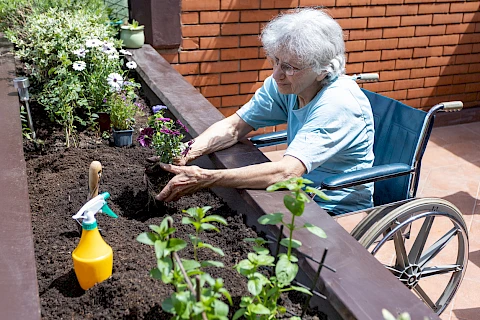
Gardening offers seniors more than fresh air and flowers. It can support physical activity, reduce stress, encourage creativity, and provide a sense of accomplishment. For older adults with limited mobility, however, traditional gardening can become more difficult over time.
With a few adjustments, caregivers can create gardening spaces that are easier to use, safer to navigate, and more enjoyable for seniors.
Benefits of Gardening for Seniors
Gardening is a fabulous way for seniors to stay active. It helps improve flexibility and strength, promoting better physical health.
Mentally, gardening provides stress relief and encourages creativity.
Socially, gardens have the power to bring people together, facilitating community engagement and offering shared experiences that help combat loneliness.
Designing Accessible Gardens
When planning a garden for seniors with limited mobility, it's essential to design it in a way that maximizes accessibility and comfort. Consider the following options:
Raised Beds
Raised beds are a fantastic option for seniors who might have difficulties bending down. By elevating the garden, you make it easier for them to reach plants without straining. Raised beds should ideally be between 24 and 36 inches in height. They can be built from wood, stone, or metal and should be wide enough to allow easy access to the middle from both sides.
Container Gardens
Container gardens offer flexibility and can be placed almost anywhere, even on a small patio. Choose containers that are easy to reach. Self-watering pots reduce the need for frequent watering. Select lightweight containers filled with easy-care plants like herbs or flowers that bring color and fragrance.
Ergonomic Tools
Ergonomic tools are designed to reduce strain on the body. Look for tools with padded handles and those that extend to minimize bending and reaching. Lightweight tools are also preferable for easy handling.
Garden Layouts for Mobility Aids
When planning a garden layout for seniors, you need to create one that accommodates mobility aids:
Wheelchairs and Walkers
Paths should be wide enough, ideally 36 inches or more, to allow easy navigation. Smooth, even surfaces minimize the risk of tripping, but they should also have a bit of texture to prevent slipping.
Creating a Comfortable and Safe Environment
Regular seating and rest areas are important for seniors to take breaks. Benches placed throughout the garden can offer comfort and spots to enjoy the surroundings. Provide shade with large umbrellas or pergolas, and ensure water is close by to encourage hydration.
Supporting Seniors' Gardening Interests
Enabling seniors to engage in gardening activities promotes independence and joy. Encourage participation by focusing on gardening tasks to match the seniors' abilities and interests. Provide guidance and help when necessary, but seniors will maximize benefits by doing the tasks themselves.
Monitoring to Guarantee Safety
Regularly check the garden for any potential hazards, like uneven pathways or overgrown plants that might cause trips. Educate seniors on safe gardening practices and adjust plans as needed.
Helping Seniors Stay Engaged
Gardening can be a meaningful way for seniors to remain active and independent. Caregivers can support this hobby by choosing gardening tasks that match the senior’s abilities and interests.
With the right setup, seniors can continue enjoying the physical, emotional, and social benefits of gardening for years to come.
If your loved one needs extra support at home, Senior Helpers Southern Georgia provides compassionate in-home care for seniors in Albany, Tifton, Thomasville, Moultrie, and Valdosta. Contact us today to learn more about our senior care services.