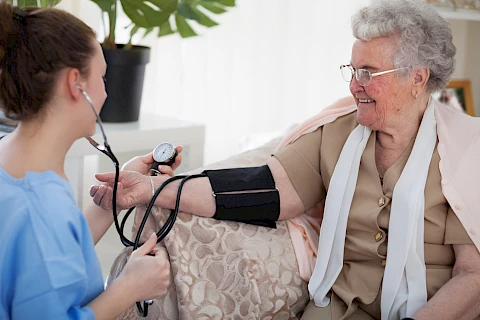
Monitoring blood pressure in seniors is a fundamental part of managing health. High blood pressure can sneak up quietly but poses serious health risks. February marks American Heart Month.
It is the perfect time to focus on helping loved ones optimize their heart health. Senior Helpers discusses the essentials of blood pressure monitoring for seniors at home, even if you are not a medical expert.
What is Blood Pressure?
Blood pressure is a measure of the force your blood exerts on the walls of your arteries. It is recorded with two numbers: the systolic pressure (the upper number) and the diastolic pressure (the lower number).
Systolic pressure measures the force when your heart beats. Diastolic pressure measures the force when your heart rests between beats.
Monitoring blood pressure helps loved ones determine their risks for heart disease, stroke, and other health issues. Conditions like hypertension often show no symptoms but can cause serious damage if left unchecked.
How to Choose the Right Equipment
Blood pressure devices come in two main types: manual and digital. Manual monitors require a stethoscope and are generally not recommended for home use by non-medical users. Digital measuring devices are more user-friendly and do all the calculations automatically.
Look for a large, easy-to-read display to ensure older adults can see their results clearly without straining. Simple, one-button operation eliminates confusion and makes the process straightforward. Memory storage for past readings allows you to track trends over time without manually recording every measurement.
Proper Technique for Accurate Readings
Keep the older adults calm and ensure they have avoided caffeine, exercise, or smoking for at least 30 minutes before measuring. Sit them in a chair with their feet flat on the ground and their back supported.
Their arm should be at heart level, resting on a table. Fit the cuff snugly but not tightly on the bare upper arm. Press the start button and wait for the monitor to display the reading.
Do not talk during the measurement, as this can alter the results. Do not take a reading over clothing, which can interfere with the cuff's ability to measure properly.
Recording and Interpreting Results
A blood pressure log can keep track of changes over time. Note the date, time, and reading each time you measure. Normal readings are usually around 120/80 mmHg, while readings above 130/80 mmHg may indicate hypertension and require attention. For blood pressure monitoring for seniors, a mobile app can also help track and analyze readings.
When to Seek Medical Attention
It is essential to know when blood pressure readings may warrant professional help. Seek medical attention if the reading is consistently above 140/90 mmHg or if you notice symptoms like dizziness, blurred vision, or headaches.
In such cases, contacting a healthcare professional is a wise step. Remember, regular check-ups with a doctor are necessary for keeping tabs on heart health.
Senior Helpers Can Help With Blood Pressure Monitoring
Supporting seniors through blood pressure monitoring for seniors is a basic step in maintaining overall health. Regular tracking helps identify changes early and supports timely medical care.
Senior Helpers offers a wide array of quality, in-home senior care services in the Savannah, Pooler, Tybee Island, and Port Wentworth areas. Contact us anytime at Senior Helpers Chatham County for professional assistance in caring for your loved ones.