Homecare Services FAQs
How do I know if my loved one needs home care services?
If your loved one is missing medications, falling more frequently, losing weight, or showing signs of memory decline or social withdrawal, these may be indicators that home care is needed. National data from the CDC shows that nearly 70% of adults over 65 will eventually require some form of long-term care, often beginning with assistance at home. Warning signs can include caregiver burnout, unpaid bills, neglected hygiene, or frequent ER visits—red flags that their safety, health, or independence may be at risk. A thoughtful and professional assessment by a trained care coordinator—like here at Senior Helpers of The Villages—can help determine the right level of in-home support based on your loved one’s daily needs and cognitive status.
What makes home care different from other senior care options?
Home care differs from other senior care options by providing highly personalized, non-medical support—such as help with bathing, meal prep, and companionship—within the senior’s own home, which reduces stress and supports independence. Unlike nursing homes or assisted living, where care is delivered in a shared setting, home care allows for one-on-one attention tailored to an individual’s lifestyle and routines. According to recent data, over 90% of older adults prefer to age in place, and home care offers a flexible solution that’s often more affordable, especially when only part-time care is needed. It’s also particularly effective for specialized support like alzheimers and dementia care, where consistency and familiar surroundings play a critical role in maintaining quality of life.
How do your caregivers support clients with chronic conditions?
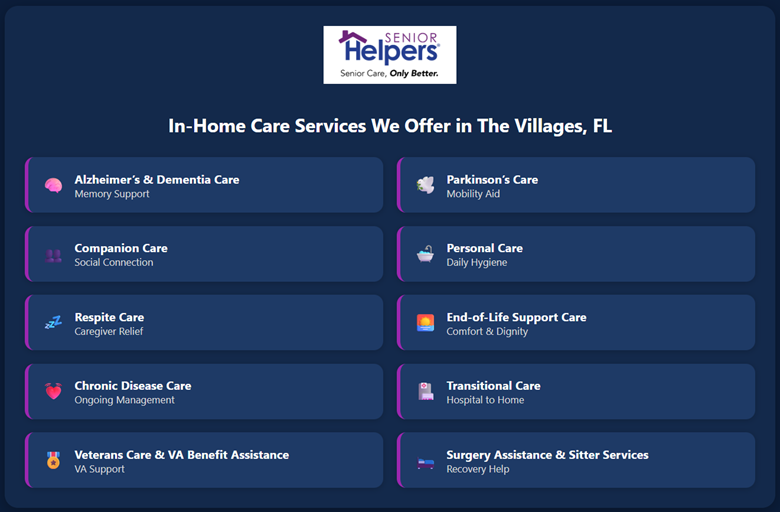
Our caregivers support clients with chronic conditions by delivering customized care plans that prioritize safety, independence, and quality of life. At Senior Helpers of The Villages, we assist with essential daily activities—such as bathing, mobility, toileting, and medication reminders—while also offering transportation to appointments and nutritious meal preparation tailored to medical needs. For individuals managing Alzheimer’s, Parkinson’s, or post-stroke recovery, our team provides specialized oversight, therapy prompts, and consistent monitoring to track changes and reduce hospital readmissions, which affect 1 in 4 Medicare beneficiaries with chronic illness. This level of chronic disease care is enhanced through ongoing caregiver training and coordination with family and healthcare providers to ensure every client receives attentive, informed, and compassionate support.