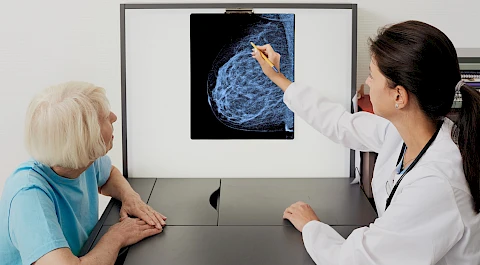
October is Breast Cancer Awareness Month, making it a good time to talk with your doctor about breast cancer screening and your personal risk factors. Not sure what to ask during your next appointment? Senior Helpers has put together a list of practical questions to help you get the conversation started and make informed decisions about your screening options.
Get Your Information Ready Before the Visit
Your personal and family medical history can influence your breast cancer screening recommendations. Before your appointment, gather these details to make the conversation easier:
- Relatives who had breast or ovarian cancer and their approximate ages at diagnosis
- The date and results of your last mammogram, if available
- Any previous breast biopsies or lumps
- Hormone therapy you take now or have taken in the past
- Any recent breast changes, such as a lump, skin dimpling, or nipple discharge
Keep your notes on paper or on your phone so you can refer to them during the visit.
Questions to Ask About Breast Cancer Screening
A mammogram every two years is ideal for women ages 40 to 74. After age 74, the benefits of continued screening are less certain, so discuss your options with your doctor.
If you're unsure where to start, these questions can guide the conversation:
- How often should I have a mammogram at my age?
- Should I continue regular screening based on my overall health?
- Do I need a routine screening mammogram or a diagnostic mammogram?
- When should I schedule my next appointment?
Write down your doctor's answers and any recommended follow-up dates. If you find it difficult to keep track of details during appointments, consider bringing a trusted friend or family member to take notes.
Discuss Your Personal Risk Factors
Your screening plan should account for more than your age. A family history of breast or ovarian cancer, dense breast tissue, and certain inherited genetic changes can affect your risk. Ask your doctor whether any of these factors apply to you and whether additional screening or genetic counseling might be appropriate.
Speak up about changes you notice. A new lump, skin change, or nipple discharge deserves medical attention, even if your last mammogram was normal. Don't wait for your next scheduled screening to mention a concern.
Make a Plan to Follow Through
Getting a referral is only part of the process. You'll also need to schedule the appointment, attend the breast cancer screening, and receive your results. If transportation or a busy schedule makes this difficult, ask whether you can coordinate your mammogram with another medical visit. Set a reminder for the appointment and follow up with the office if your results don't arrive within the timeframe provided.
Stay on Top of Medical Appointments with Senior Helpers
Regular breast cancer screening can help senior women detect cancer early. Keeping up with screenings and follow-up visits can be easier with the right support. Senior Helpers Gainesville offers appointment reminders, transportation to medical visits, and more. Contact us to learn more about in-home support in Alachua, Archer, Bell, Bronson, and Cedar Key.