June is National Osteoporosis Month, and it's a good time to think honestly about what you can do to support your bones. Osteoporosis isn't something you feel until a fracture happens, which is part of what makes it easy to push to the back of the mind. But the good news is that osteoporosis-friendly exercises, done consistently, genuinely support bone density. It can also help reduce fracture risk, even if you've already received a diagnosis.
Why Weight-Bearing and Resistance Exercise Matter
Your bones respond to mechanical stress. When you put load on them through standing, walking, or resistance training, cells called osteoblasts get to work building new bone tissue. Activities that remove that load, like swimming or cycling, are valuable for cardiovascular health and joint comfort. Still, they don't deliver the same bone-building stimulus. The Bone Health & Osteoporosis Foundation recommends osteoporosis-friendly exercises. Weight-bearing and muscle-strengthening activities are two of the most effective strategies for maintaining bone health in older adults. Weight-bearing means any activity in which your bones support your body weight against gravity.
Weight-Bearing Osteoporosis-Friendly Exercises to Consider
Walking is the most accessible starting point. A 20- to 30-minute walk at a comfortable pace, done most days of the week, provides consistent weight-bearing stimulus without excessive joint stress. In Redlands or Highland, the morning hours before the summer heat builds are a pleasant time to be outside.
Gentle hiking on even, manageable terrain offers similar benefits, with the added engagement of navigating varied terrain. Dancing is another option many older aduts enjoy, and it has the bonus of improving balance, coordination, and bone health.
Low-impact aerobics classes, including those designed specifically for older adults, deliver weight-bearing benefit in a supervised, social setting. Check community centers in Yucaipa and Loma Linda for senior fitness programs.
Resistance and Balance Exercises
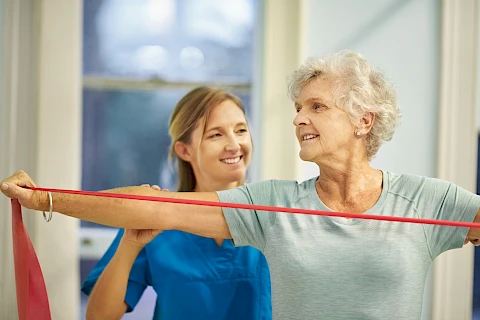
Muscle-strengthening exercises matter because stronger muscles place more mechanical load on bones. Resistance bands are a good option for home use, gentle on the joints and adaptable to different fitness levels. Chair-based exercises that involve lifting or pressing against resistance count too.
Balance work is closely linked to fall prevention, and for someone living with osteoporosis, avoiding falls is as important as building bone. Single-leg standing near a counter for support, heel-to-toe walking along a hallway, and seated leg lifts are all safe starting points.
A few important notes:
- Avoid exercises that involve bending forward from the waist or rounding the spine, which can increase fracture risk in people with osteoporosis
- High-impact activities like jumping or running may not be appropriate depending on bone density and overall health; your doctor can guide you here
- Always speak with your healthcare provider before beginning a new exercise routine, especially if you've had a recent fracture or significant bone loss
Building a Routine That Supports Your Bones
The most effective osteoporosis-friendly exercises are the ones you can sustain over months and years. Start with what feels manageable and build gradually. For elderly retirees across Redlands, Rialto, San Bernardino, and Mentone, Senior Helpers of Redlands provides in-home care that can include safe accompaniment on walks and support for an active, independent daily routine. Contact us to talk about how we can help you stay strong this summer.