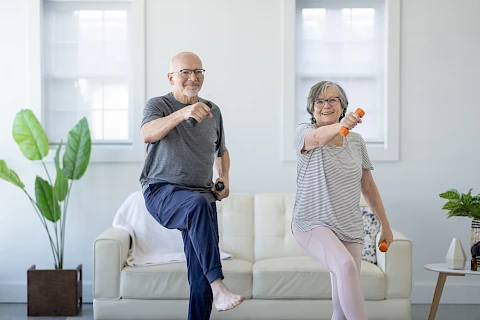
Most people know that exercise is good for the heart and the joints. Fewer realize just how directly it affects the brain. However, the research on exercise and brain health has grown remarkably compelling over the last decade. Senior Helpers knows that for family caregivers looking after an older loved one, understanding this connection can shift exercise from an afterthought to a genuine priority.
How Exercise and Brain Health Are Connected at a Physical Level
When your loved one walks or does light resistance training, blood flow to the brain increases, providing crucial oxygen and glucose to neurons. Regular physical activity promotes the growth of new blood vessels, helping maintain cognitive function over time. Exercise also stimulates the production of Brain-Derived Neurotrophic Factor (BDNF), which supports neuron survival and encourages new connections. A landmark study published in Proceedings of the National Academy of Sciences found that regular aerobic exercise increased the size of the hippocampus, the brain region central to memory, in older adults.
New Movement Patterns and Neural Pathways
Learning a new physical activity, like a yoga class or a different walking route, challenges the brain more than familiar movements. When your loved one tries something new, their brain builds the neural pathways needed to coordinate that movement. That process of building and reinforcing new pathways is one of the clearest links between exercise and brain health that researchers have identified.
This is one reason why variety matters alongside consistency in an exercise routine. A caregiver who alternates walks with light stretching sessions and occasional resistance band exercises at home is helping their loved one benefit on multiple levels at once.
Translating Research Into Daily Life
You don't need a gym membership or a formal fitness program to make meaningful gains in exercise and brain health. The CDC recommends that older adults get at least 150 minutes of moderate-intensity aerobic activity weekly, plus 2 days of muscle-strengthening activity. This translates to about 22 minutes of walking daily. For seniors in Redlands, Yucaipa, or Colton, morning neighborhood walks are a great start. Walking with companions enhances safety and motivation, and caregivers benefit from the exercise and mental stimulation too. A few things worth keeping in mind:
- Start slowly if your loved one has been mostly sedentary
- Always check with your physician before beginning a new exercise routine
- Focus on consistency over intensity; short daily movement is more valuable than occasional intense effort
- Watch for signs of overexertion, including unusual fatigue, dizziness, or chest discomfort
Supporting Brain Health at Every Stage
The evidence is clear that movement supports the brain in meaningful, measurable ways. For caregivers across Redlands, Rialto, San Bernardino, and Mentone, Senior Helpers of Redlands can help integrate regular activity and supportive in-home care into your loved one's daily routine. Contact us to learn how our team can support your family's goals for health and independence.