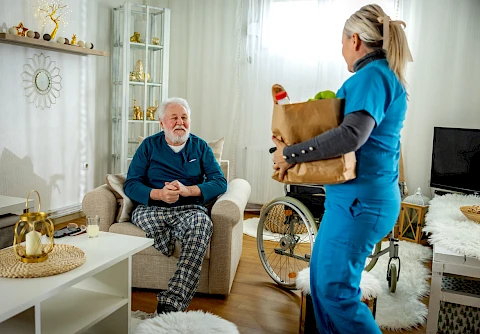
Discharge day tends to arrive faster than anyone expects, so ask the care team early what the first week will look like. For older adults, that can mean arriving home with a bag of new prescriptions and no plan for dinner. Lining up non-clinical in-home care in advance means you can rest while someone else handles the chores. Senior Helpers understands that scheduling everyday help in advance means you can rest while someone else handles the chores.
Plan the Help Before the Discharge Date
Ask the hospital's discharge planner or social worker when you're likely to go home, then walk through a normal day in your house in your head, from the front step to the bedside lamp.
Sort out the ride home first. Then picture the house. Stairs, a step-down shower, and a low bed can all feel different after surgery or a long illness. Non-clinical in-home care can be booked to meet you at the door and stay for the first afternoon, which takes a lot of pressure off a daughter driving across the
Everyday Tasks a Caretaker Can Take On
Non-clinical caregivers assist with daily activities that can become challenging during your healing process. They help with tasks such as bathing and dressing, preparing meals, doing the dishes, doing the laundry, and maintaining cleanliness in the kitchen and bathroom. Errands are on the list too. Picking up groceries saves you a tiring outing.
Family carers provide medication reminders but don't administer medications, change dressings, or perform any medical tasks, so wound care and therapy remain with your doctors, nurses, and therapists.
Staying Steady on Your Feet at Home
Weakness can raise the chance of a fall. The Centers for Disease Control and Prevention has pages on older adult falls with ways to lower the risk. Print them and leave a copy by your chair for whoever helps you at home.
A caretaker can walk beside you to the bathroom at night, keep walkways clear, and make sure the items you use most are within easy reach. Your doctor or physical therapist can tell you which activities are safe right now.
Weeks Two Through Six
Recovery has good days and slow ones. Some days you'll feel ready to water the roses in the backyard, and others you'll want to stay in your robe until noon.
That middle stretch can get lonely, especially once friends assume you're back to normal and stop calling. Non-clinical in-home care during that middle stretch can keep you company and drive you to follow-up visits. It can also help you get back to the things you enjoy, like having lunch out or attending church on Sunday. For relatives pitching in during these weeks, the caregiving section of the National Institute on Aging site is a sensible first stop.
Easing Back Into a Non-Clinical In-Home Care Routine
The first week home is usually the busiest. Help can taper off as you get stronger. Senior Helpers Granada Hills arranges that kind of non-medical help, from personal care and meals to light housekeeping, errands, transportation, and reminders, for people in Granada Hills, Northridge, Sylmar, San Fernando, and Lake View Terrace. Contact us before your next discharge date so the schedule is ready.