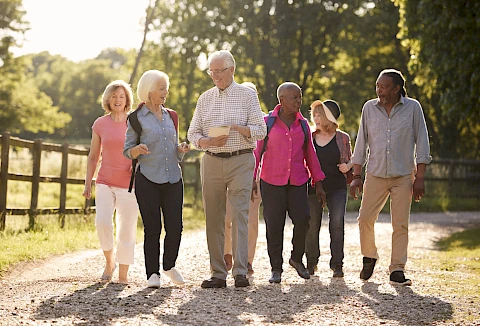
A walk is better with company. Most people know this instinctively, but it's worth saying plainly: older adults who walk with others are more likely to keep walking. The social pull of a group keeps the habit alive on days when motivation runs thin, and the conversation makes the miles feel shorter.
That's one reason walking groups for seniors continue to grow in popularity. If your senior loved one has been talking about wanting to get outside more, consider connecting them with a walking group. It might be one of the most practical things you can do for them this spring.
What Walking Groups Offer Beyond the Exercise
The physical benefits of regular walking are well documented. The CDC recommends that older adults aim for at least 150 minutes of moderate-intensity activity each week.
Brisk walking is one of the most accessible ways to reach that goal. But for loved ones, especially those who live alone or have seen their social circle shrink, the social dimension matters just as much. Walking alongside others reduces isolation, provides routine, and creates low-stakes opportunities for conversation and connection.
For the elderly in Sedona who miss the daily rhythms of working life, meeting a small group on Tuesday and Thursday mornings can provide a sense of structure. Gathering at a familiar trailhead also helps anchor the week in a meaningful way.
How to Find a Group That Fits
Start with what's already organized. Senior centers in Flagstaff and Cottonwood often coordinate regular walking programs, sometimes with staff or volunteers who help pace the group. Many communities have mall-walking programs that run in the early morning. This is particularly useful in summer when outdoor temperatures in Tuba City and Winslow can climb quickly.
Local chapters of the YMCA, faith communities, and parks and recreation departments are also good starting points. A phone call to a senior center in Camp Verde or Clarkdale can turn up options that don't always show up in an online search.
Assessing Whether a Group Is a Good Fit
Before your loved one joins walking groups for older adults, ask a few practical questions: What pace does the group walk? How far? Is the terrain flat? Does the group wait if someone needs to rest?
A group that moves at a brisk athletic pace is not the right fit for loved ones managing arthritis or recovering from a hip replacement. Most walking group leaders are happy to discuss what to expect before anyone shows up.
When There’s No Group Nearby
In smaller communities like Jerome, Cornville, or Rimrock, organized walking programs may not exist. That's actually an opportunity. An older adults may connect with a neighbor, a church acquaintance, or someone from a local coffee group. They can then agree to walk together twice a week. This simple arrangement can be just as valuable as a formal program. Two people are enough.
You can help by identifying a willing walking partner in your loved one's network. Then work together to build a simple, specific plan. Choose the same time and route for each walk. Agree that each person will call if they need to cancel. That structure turns a good idea into a real habit.
Walking Well, With a Little Help
Walking groups for seniors offer a simple way to combine movement, routine, and social connection in daily life. With the right support, these groups can become a steady part of a senior’s week and contribute to both physical health and emotional well-being.
Senior Helpers of Flagstaff helps older adults stay active and connected across Heber, Snowflake, Flagstaff, Munds Park, Colorado City, and Fredonia. Contact us to learn how our caregivers can support your loved one's daily routine and independence.